📘 Grade 5 Science Complete Course covers Life Science, Earth Science, and Physical Science in a simple and interesting way. Students learn about plants, animals, the human body, rocks, weather, matter, and energy. The course includes fun activities and experiments to build curiosity. It helps children connect science with real life and develop strong scientific skills.
📘 Grade 5 Science Complete Course teaches students about Life Science, Earth Science, and Physical Science through easy lessons and activities. Children explore plants, animals, weather, matter, energy, and the human body in a fun way. The course builds curiosity and develops observation and problem-solving skills. Its importance is that it prepares students to understand the world around them and use science in daily life.
Join meThe Grade 5 Science course explores Life Science, Earth Science, and Physical Science with clear concepts. Students discover topics like plants, animals, energy, matter, weather, and the human body. Interactive lessons encourage curiosity and critical thinking.
This course helps students build a strong foundation for future scientific learning.
Grade 5 Science introduces students to deeper scientific concepts with hands-on activities, experiments, and observations. It helps children connect science with their daily life and natural surroundings.
Life Science –
Plants and their structures (roots, stems, leaves, flowers, fruits, seeds)
Animal life cycles (birth, growth, reproduction, death)
Human body systems (digestive, circulatory, respiratory)
Ecosystems, food chains, and adaptation
Earth Science –
Earth’s materials (rocks, soil, minerals)
Water cycle and weather patterns
Earth’s resources (natural resources, fossil fuels)
Earth in space (moon, sun, planets)
Physical Science –
Matter and its states (solid, liquid, gas)
Properties of light, sound, and energy
Simple machines (lever, pulley, wheel)
Force, motion, and magnetism
Life Science is the study of all living things such as plants, animals, and humans. It explains how living things grow, survive, reproduce, and interact with their environment. Life Science helps us understand the importance of nature, how our body works, and how plants and animals depend on each other for food, air, and shelter. It also teaches us to take care of the Earth and its living creatures.
All living things are made up of tiny parts called cells. Some living things, like bacteria, have only one cell, while bigger organisms like humans and plants have millions of cells. Cells work like small factories that keep living things alive. They help in breathing, growing, and producing energy. Without cells, life cannot exist.
Living things pass on their features from parents to children. This process is called heredity. It explains why children look like their parents. The study of heredity is called genetics. For example, if parents have curly hair, their children may also have curly hair. This happens because of special instructions in the body called genes.
Living things slowly change over time to survive better in their surroundings. This process is called evolution. Adaptation means having special features to live in a place. For example, fish have gills to breathe in water, and camels can store water to live in the desert. These changes help living things survive in different environments.
Ecology is the study of how living things interact with each other and with nature. In an ecosystem, plants, animals, and microorganisms live together. Plants make food, animals eat plants or other animals, and decomposers clean up waste by breaking it down. All living things are connected, and if one part is harmed, the whole system is affected.
Our body has different systems that work together to keep us alive. The digestive system breaks food into energy, the circulatory system carries blood, the respiratory system helps us breathe, and the nervous system controls our actions. The reproductive system allows humans to have children. All these systems are very important for life.
Microorganisms are tiny living things that cannot be seen without a microscope. They include bacteria, fungi, and protozoa. Some microorganisms are helpful, like bacteria that help us digest food or yeast used to make bread. But some microorganisms cause diseases, like germs that give us the flu.
Plants are very important for life on Earth. They make their own food through a process called photosynthesis, using sunlight, water, and carbon dioxide. Plants give us oxygen to breathe and food to eat. They are the base of the food chain, which means all animals and humans depend on them for survival.
Life Science is the study of living things and their environment. Its main parts are cells, genetics, evolution, ecology, human body systems, microorganisms, and plants. These components explain how living things are built, how they survive, and how they are connected to nature.
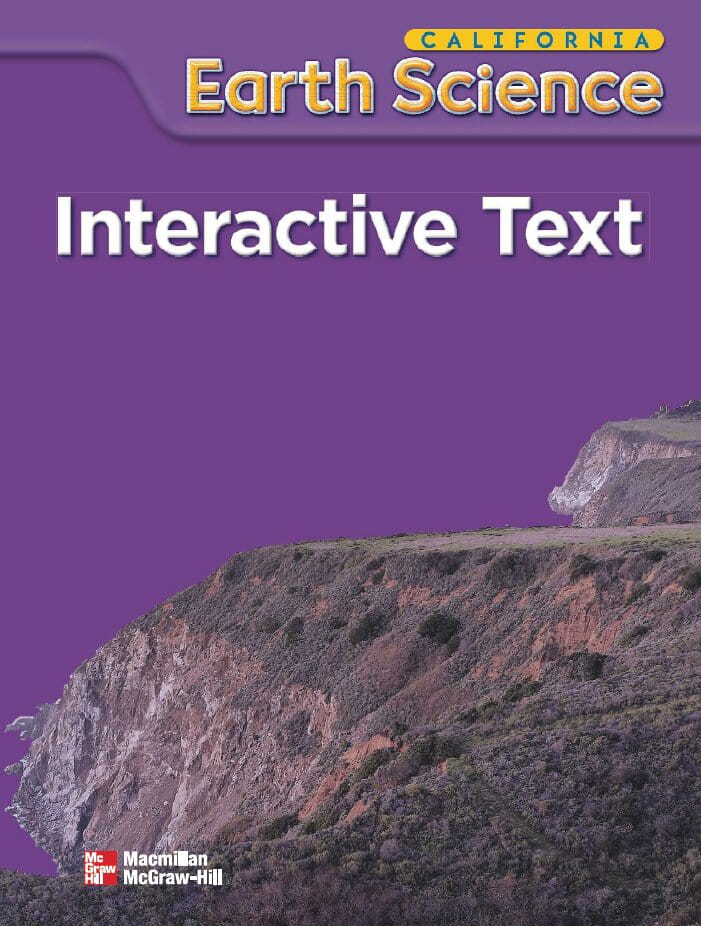
🌍 Earth Science is the study of our planet Earth and its natural processes. It includes the study of rocks, soil, water, air, and how they shape the Earth. Earth Science also explains weather, seasons, earthquakes, volcanoes, and the water cycle. It helps us understand natural resources like minerals, forests, and fossil fuels. By studying Earth Science, we learn how the Earth changes over time. It also teaches us how to protect our planet and use its resources wisely.
Earth Science is the study of the Earth, its land, air, water, and all the natural processes that shape our planet. It helps us understand how mountains form, why earthquakes and volcanoes happen, how weather changes, and how natural resources are used. Earth Science also explains the Earth’s place in the solar system and how it changes over time. Learning Earth Science helps us take care of our environment and use Earth’s resources in a safe and wise way.
Geology is the study of rocks, soil, and the layers of the Earth. It explains how mountains, valleys, and landforms are made. Rocks change through the rock cycle into igneous, sedimentary, and metamorphic forms. Fossils found in rocks tell us about plants and animals that lived long ago.
Nots : Geology teaches us about the solid part of the Earth. It explains how land is formed and how it changes with time. By studying rocks and soil, scientists discover the history of the Earth. Fossils found in rocks show us how animals and plants lived millions of years ago.
Meteorology is the study of the atmosphere and weather. It explains how clouds, rain, wind, storms, and seasons are formed. The water cycle (evaporation, condensation, precipitation) plays an important role in weather.
Nots : Meteorology helps us understand the air around us. It explains how the sun’s heat causes changes in weather and why we have different seasons. Meteorologists study storms, rainfall, and climate so people can stay safe and plan their lives better.
Astronomy is the study of the Earth’s place in space. It includes the sun, moon, planets, stars, and galaxies. It helps us understand day and night, eclipses, and the movement of planets.
Nots : Astronomy shows us that the Earth is part of a much larger universe. It explains how the sun gives us light and heat, how the moon changes shape, and why we see stars at night. It also helps us learn about planets and their movements in the solar system.
Oceanography is the study of oceans, seas, rivers, and lakes. It explains waves, tides, currents, and how oceans affect the climate. Oceans are also home to millions of living organisms.
Nots : Oceanography helps us understand the importance of water on Earth. It explains how tides and waves work and how oceans control weather. Oceans also provide food, oxygen, and natural resources. Protecting our oceans is very important for life on Earth.
Earth Science is the study of the Earth and its natural systems. Its main parts are:
Geology (land and rocks)
Meteorology (weather and air)
Astronomy (space and solar system)
Oceanography (oceans and water bodies)
These components explain how the Earth is formed, how it changes, and how it fits into the larger universe.
⚡ Physical Science is the study of non-living things such as matter, energy, force, and motion. It explains how objects move, why things float or sink, and how machines make work easier. Physical Science also covers light, sound, electricity, and magnetism. It helps us understand the different states of matter like solid, liquid, and gas. By learning Physical Science, we discover how energy changes form and how technology works. It is important because it connects science to our daily life and inventions.
Physical Science is the study of non-living things. It explains matter, energy, force, motion, light, sound, electricity, and magnetism. It helps us understand how the world works and how technology is created. Physical Science is divided into two main parts: Physics (study of energy, force, and motion) and Chemistry (study of matter and its changes). By learning Physical Science, students understand the basic rules of nature and how these rules are used in machines, tools, and everyday life.
Matter is anything that has mass and takes up space. It exists in three main states: solid, liquid, and gas. Matter is made of very tiny particles called atoms and molecules.
Nots : Matter is the basic building block of everything around us. A chair, water, and air are all forms of matter. Solids have a fixed shape, liquids take the shape of their container, and gases spread everywhere. Learning about matter helps us understand how materials change from one state to another, like ice melting into water.
Energy is the ability to do work. It comes in many forms such as heat, light, sound, and electricity. Energy cannot be created or destroyed; it only changes from one form to another.
Nots : Energy is everywhere around us. The sun gives us heat and light energy, while food gives us chemical energy to live. A moving car has mechanical energy, and electricity powers our homes. Without energy, no work or life would be possible.
Force is a push or pull that can change the motion of an object. Motion means the movement of objects from one place to another. Newton’s laws explain how force and motion work.
Nots : Force and motion help us understand why things move or stop. For example, we use force to kick a ball, and gravity pulls it back to the ground. Motion is seen everywhere, from cars driving on roads to planets moving around the sun. These concepts explain the basic rules of movement.
Light allows us to see, and it travels in straight lines. It can be reflected, refracted, or absorbed. Sound is a form of energy that travels in waves through air, water, or solid objects.
Nots : Light and sound are very important in our daily lives. Light helps plants grow and allows us to see our surroundings. Sound lets us communicate with each other. Mirrors reflect light, and lenses bend it to make glasses or cameras. Sound travels faster in water than in air, which is why whales can communicate across oceans.
Electricity is the flow of electric charges, and magnetism is the force produced by magnets. Together, they form electromagnetism, which is used in many machines.
Nots : Electricity and magnetism power our modern world. Electricity lights up our homes, runs computers, and charges mobile phones. Magnets are used in compasses, speakers, and motors. When combined, they create powerful tools like electric fans, trains, and generators.
Physical Science is the study of matter, energy, force, motion, light, sound, electricity, and magnetism.
Its main components are:
Matter
Energy
Force and Motion
Light and Sound
Electricity and Magnetism
These components explain how non-living things work and how science is used in daily life, machines, and technology.
(+92) 3015435179
rahailc@gmail.com
Mean GT Rode Rachna Town Shahdara Lahore Pakistan
© 2025 Education. All Rights Reserved by Science Nauts Kids